
When most people think about a funeral home, they probably picture the funeral director helping a family make arrangements, plan a service, or choose a casket or urn.
But long before many of those decisions are made, there is another important team at work: the First Call Team.
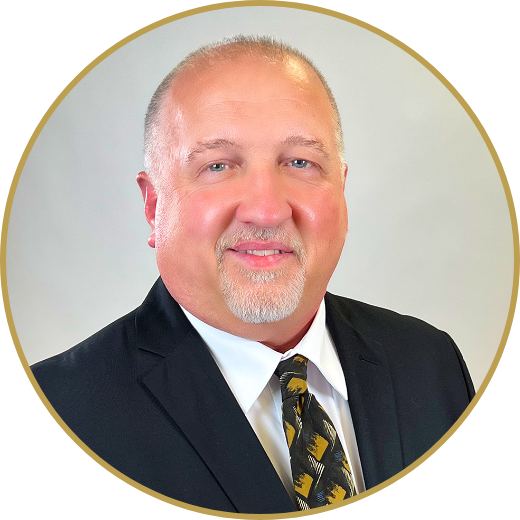
These are the people who respond when a funeral home receives a call that someone has died. They meet families during some of the most difficult moments of their lives, bring their loved one into the care of the funeral home, and make sure that person is treated with respect and dignity throughout the process. For Doug Palmer, being part of that team was never something he planned. In fact, when he first began hearing from people at Piasecki Funeral Home asking when he might come to work there, his response was always the same: “I’ll think about it someday.” Eventually, that “someday” arrived.
Palmer had been a stay-at-home dad for about 18 years. Along the way, he did home remodeling and concrete work before eventually beginning part-time work for Kenosha Unified School District (KUSD). He later joined Piasecki while also moving into full-time work with KUDS, where he continues to work today.
His introduction to funeral service came almost by accident.
“One Saturday morning after morning Mass, Jim Landgraf asked if I would be interested in coming to work here and be on the first call team,” Palmer recalls. “I said I would think about it.” Landgraf encouraged him to come in and learn more about the position. Palmer scheduled an informational meeting to find out what the work involved. What he expected to be a chance to explore the possibility quickly turned into something more.
“It turned out they already wanted to hire me and get me to sign on,” he says.
Nearly 12 years later, Palmer is still part of the team.
A Call Can Come at Any Time
Being on the First Call Team means being ready whenever the phone rings. Palmer explains the team receives a call from the director on duty regardless of the hour. From there, team members have approximately 30 minutes to get dressed, arrive at the funeral home and prepare for the transfer.
At the location, the funeral director handles the conversation with the family while the First Call Team focuses on bringing the deceased into the funeral home’s care. Once back at Piasecki, the team helps with preparation and gets things ready for whatever call may come next.
It is a process that requires both efficiency and compassion.
“When you arrive at a family’s home, you feel compassion but you also have a job to do,” Palmer explains. “Once the introductions are through, my thoughts go to how we can transfer the decedent with care and dignity.”
That balance is at the heart of the work. The people on the First Call Team may not spend much time talking with a family, but their presence and actions matter. They are often among the first representatives of the funeral home that a family encounters.
Palmer says the goal is simple: treat every person as they would want a member of their own family treated. That same philosophy continues once the deceased arrives at the funeral home.
“We take care of everyone with the utmost respect and dignity as if they are our family member,” he says.
The Calls You Don’t Forget
The work can be physically and emotionally demanding, but Palmer says some of the biggest challenges are also practical ones. For him, it can be the middle-of-the-night call followed by the reality of having to report to his other job just a few hours later.
“Getting the 2 or 2:30 a.m. call and having to be at your full-time job at 6:50 a.m.,” he says, “that’s the hard part.”
The First Call Team members also rely on one another. Sometimes that means simply talking with the person they are working with while driving back to the funeral home or preparing for the next call. For Palmer, however, his faith provides another source of perspective.
“For me, I feel as if I’m doing God’s work in helping to bury the dead,” he says. He views the work as one of the corporal works of mercy, found in the teachings of Jesus.
That perspective has helped him put the difficult moments into context.
“I’ve been doing it for some time and when you approach it as doing a corporal work of mercy for God, it takes the weight off my shoulders.”
A Life Outside the Funeral Home
While Palmer’s work with the First Call Team is an important part of his life, it is certainly not the only part.
He and his wife have been married for 35 years and have five children, two daughters and three sons, ranging in age from 23 to 33. The family also includes a four-year-old dog who has been with them since he was a puppy.
Away from work, Palmer enjoys spending time with family and friends, hanging out in the yard, grilling and gardening. He enjoys golfing and playing darts, collects sports memorabilia and follows Wisconsin’s professional and college sports teams, including the Packers, Brewers, Bucks, Badgers and Golden Eagles.
His family, friends, Catholic faith and his country are among the things he says he is most passionate about.
Making the Most of Every Day
Perhaps working around death inevitably changes the way a person thinks about life. Palmer isn’t sure the job has fundamentally changed his outlook, but it has reinforced something important.
“You just have to make the most of every day and try to live the life God gave you to the best of your abilities.”
That philosophy seems fitting for someone who never set out to work in funeral service in the first place. Nearly 12 years ago, Palmer wasn’t looking for a career at a funeral home. He was simply willing to listen when an old acquaintance asked him to consider something different.
Today, he is part of a team that most families will only encounter during an extraordinarily difficult moment. His role may happen largely behind the scenes, but it carries a responsibility that Palmer takes seriously: ensuring that every person placed in his care is treated with the same respect and dignity he would want for someone in his own family.